 English
 简体中文
简体中文 italiano
 Español
 Deutsch
 português
 한국어
한국어 日本語
日本語 Français
 Русский язык
  Україна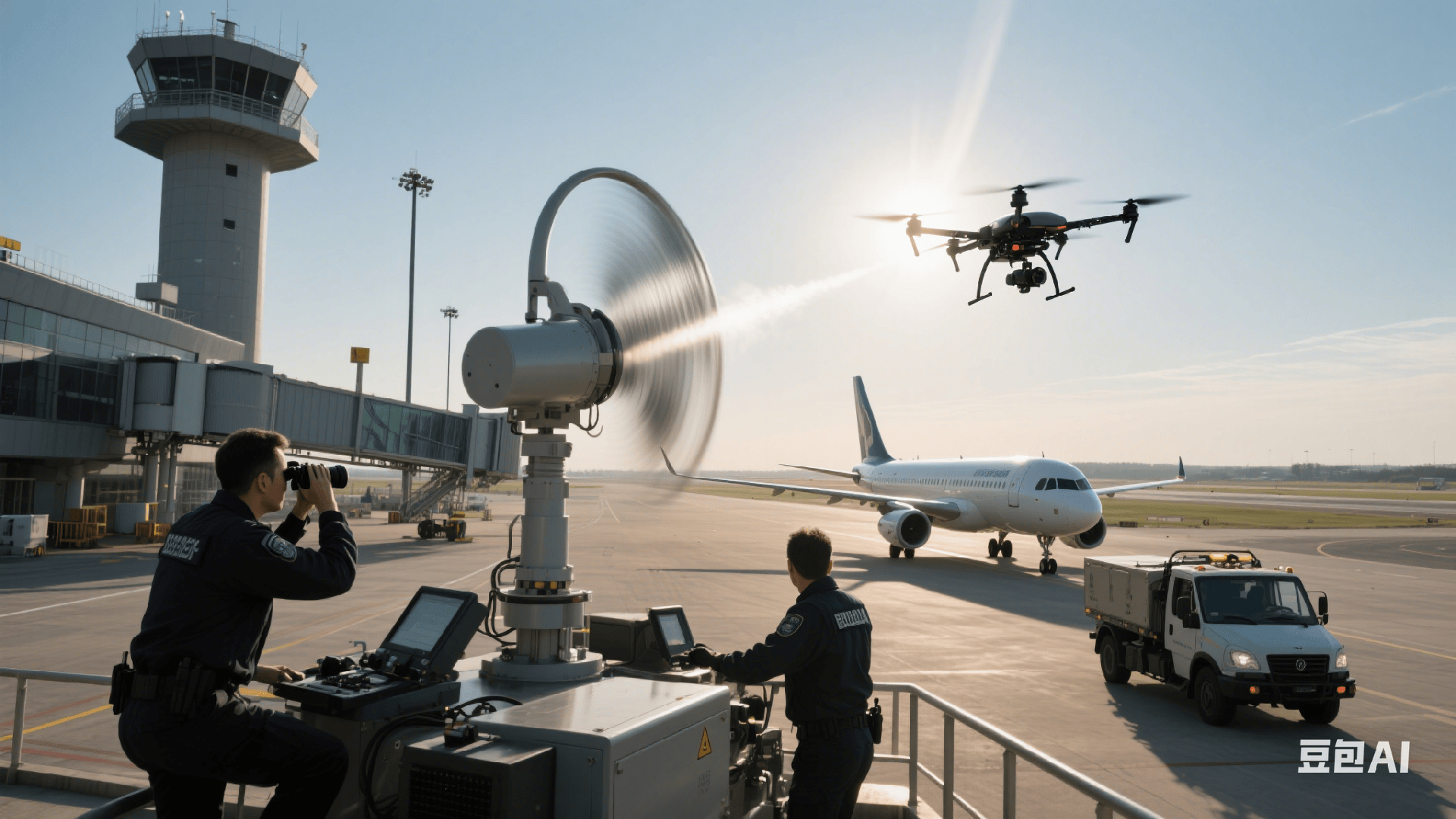
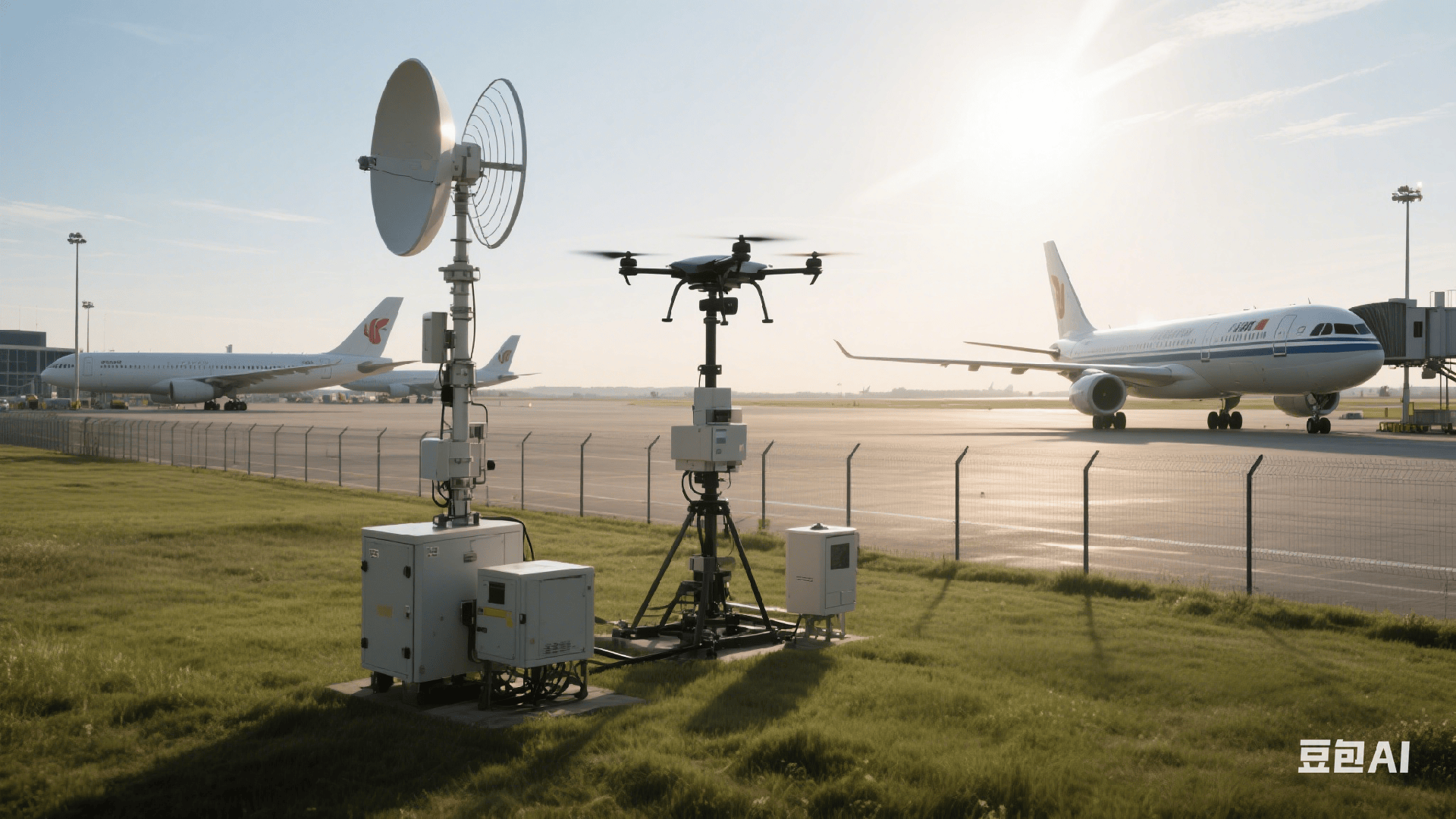
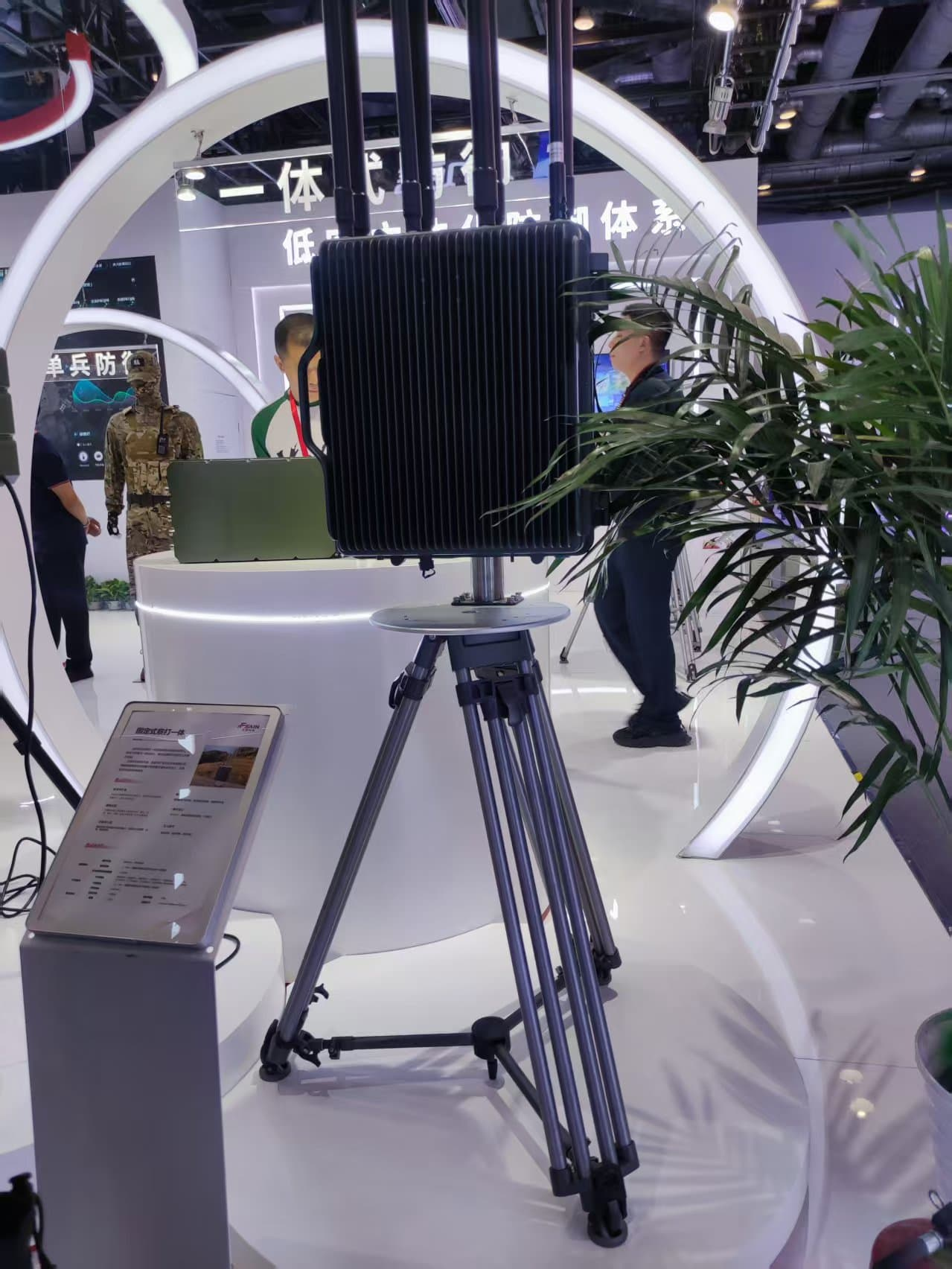
Counter Drone Solutions For Airports


Counter Drone Solutions For Airports
The threat of drones to civil aviation airports has evolved from a single interference to a systematic security crisis. Collision risk is the primary threat. When the consumer drone flies at a height of 500 meters and a speed of 200 km/h, its kinetic energy is enough to penetrate the engine or wing of the passenger plane. In the Tianjin Binhai Airport incident in 2024, 32 flights were alternated, and the direct economic loss exceeded 200 million yuan. The threat of electromagnetic interference is more concealed. The communication frequency band of UAV (2.4GHz/5.8GHz) overlaps with the airport navigation system (1090MHz ADS-B), which may lead to misjudgment of the autopilot system. London Heathrow Airport cancelled 12 flights. The cluster attack mode breaks through the traditional defense limit. A single cluster of 50 UAVs in the Russian-Ukrainian conflict can paralyze the runway for 4 hours, while the interception efficiency of the traditional air defense system is less than 30%.
The necessity of deploying anti-UAV system is reflected in three aspects: at the safety bottom line level, the clearance area (20 kilometers at both ends of the runway and 10 kilometers at both sides) needs to be absolutely controlled during the take-off and landing of civil airliners, and any intrusion may lead to disastrous consequences; On the economic impact level, a single drone disturbance incident caused an average loss of 15 million yuan per hour at the airport (for example, the loss of Chengdu Shuangliu Airport in 2017 exceeded 10 million yuan); In terms of compliance, China's Interim Regulations on Flight Management of Unmanned Aerial Vehicles explicitly requires airports to establish active defense systems, and international organizations such as FAA also force the deployment of countermeasures.
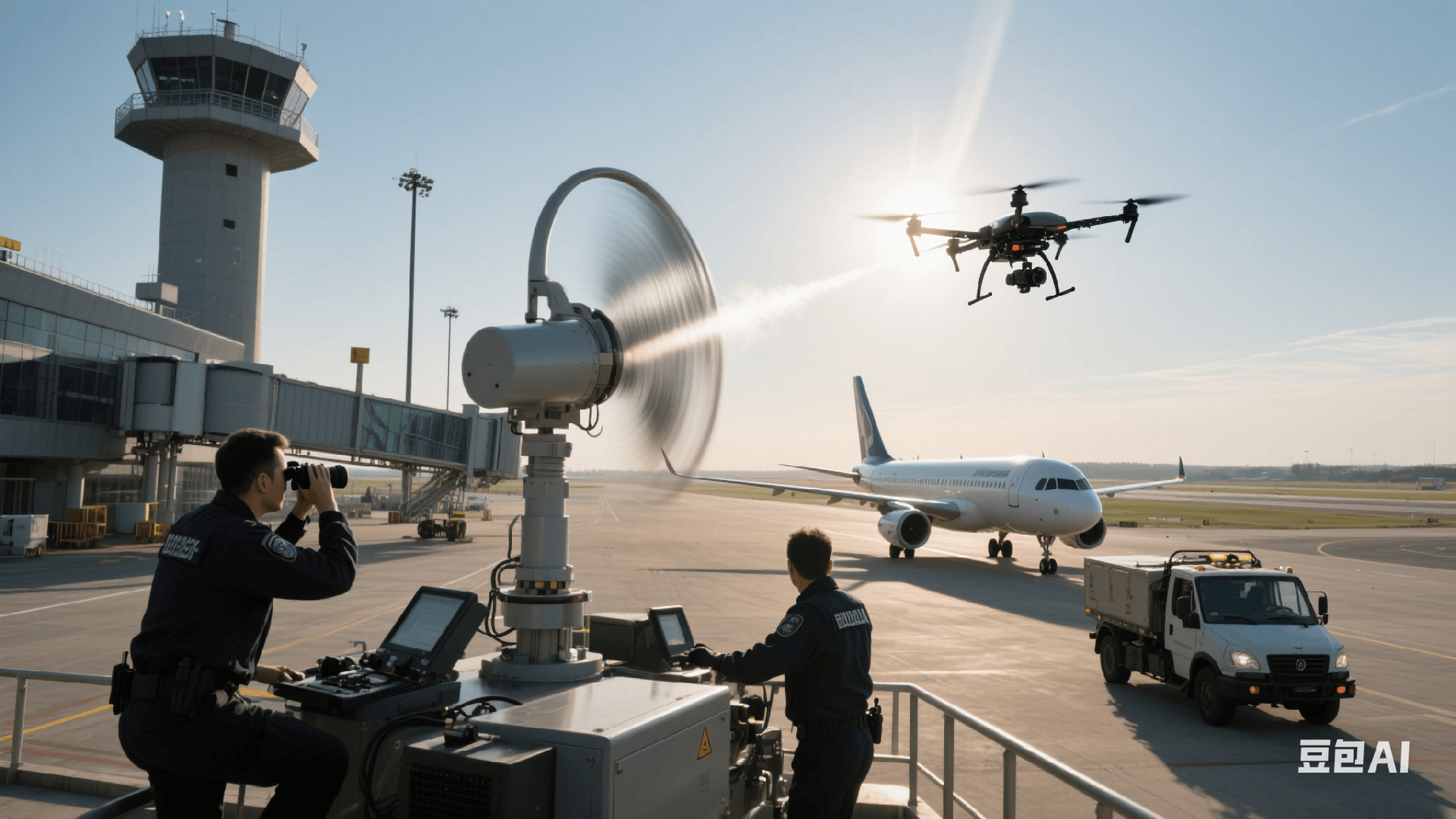
The anti-drone system needs to build a "far-middle-near" three-layer defense system, and dynamically adapt the equipment combination according to the airport characteristics;
First, the layered defense system design
Outer defense (5-20km)
Detection layer: Ku-band phased array radar (detection accuracy of 0.1m² RCS) and multi-spectral photoelectric system (infrared+visible light fusion) can realize all-weather monitoring, and the recognition rate is more than 95%. With distributed optical fiber acoustic sensor, the false alarm rate is reduced to below 5%.
Interference layer: the navigation decoy system generates GPS/ Beidou signal with virtual coordinate deviation > 1km, blocking the remote control link, and the error is controlled within 0.5m. For example, a 5km radar base station deployed on the outer layer of a nuclear power plant can realize 360-degree scanning, and the AI algorithm compresses the threat identification delay to 20 seconds.
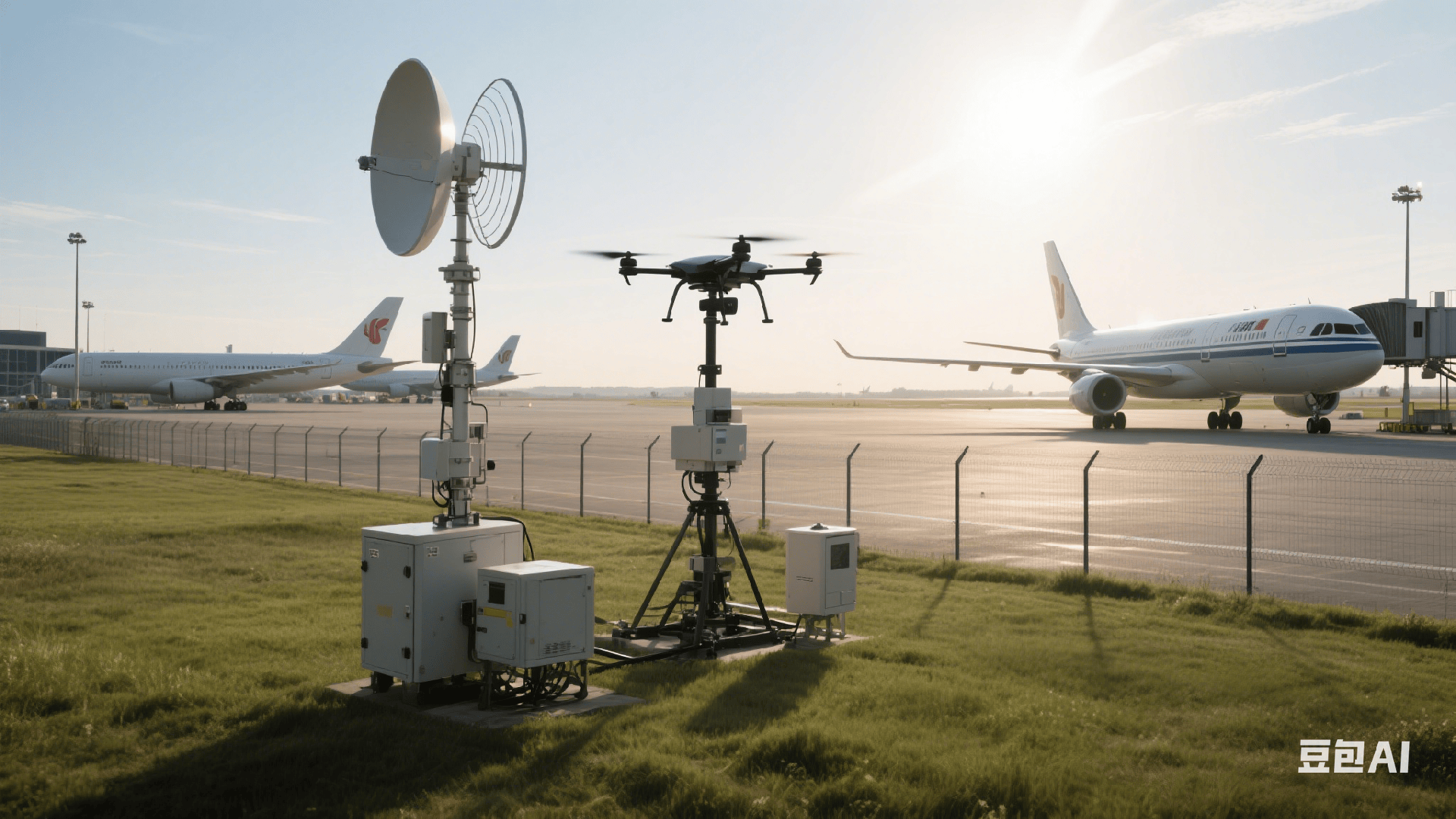
Middle defense (1-5km)
Hard kill: 20kW high-power microwave weapon (covering a radius of 1km) paralyzes the UAV circuit, and fiber-guided missile (hit accuracy of 1m) intercepts high-speed targets. In the test of an oil refinery, five simulated invading UAVs were successfully intercepted, with an average response time of 1.8 seconds.
Soft kill: Multi-band jamming array suppresses 1.2-6GHz communication link, power density is 25dBm/MHz, and response time is less than 1 second. Combined with AI classification engine, meteorological UAV and attack aircraft are distinguished.
Inner defense (within 1 km)
Directional energy weapon: 50kW laser (3 seconds to melt the rotor) combined with electromagnetic pulse network (instantaneous 8kV high voltage), the single interception cost is less than 5 dollars, and the capture rate of carbon fiber interception network (launching speed of 25m/s) or suicide interception drone is more than 80%.
Second, the regionalization adaptation scheme
Runway core area: the electromagnetic sensitive area needs anti-interference design, and the outer layer is equipped with anti-interference phased array radar (100dB electromagnetic shielding) and thermal imager (identifying the temperature difference of 0.05℃); Middle-level microwave weapons suppress communication links; The inner layer is equipped with portable jamming gun (140dB sound wave destroys gyroscope).
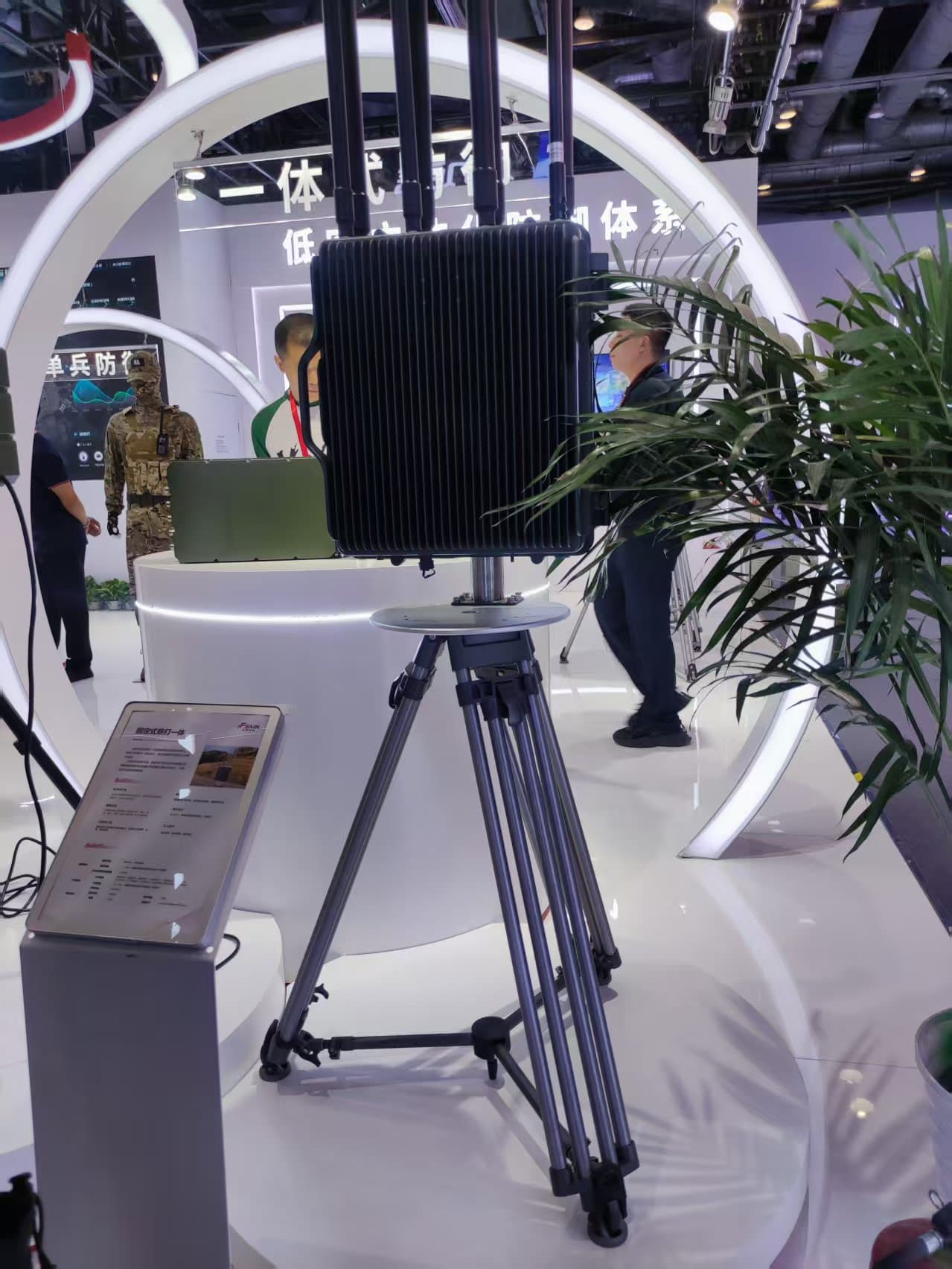
Airspace of the terminal building: explosion-proof design is required, and the outer layer uses millimeter-wave radar to penetrate the clouds, combined with AI video analysis (to distinguish birds from drones); A directional acoustic jammer (110dB) was deployed in the middle layer to destroy the flight control system.
Cargo apron: focus on preventing low, slow and small targets, and deploy acoustic sensors on the outer layer (detection distance is 3 km); The middle layer adopts a mesh interception system (launch speed 40 m/s); The inner layer is equipped with electromagnetic pulse device (energy density < 30J/m).
Third, the key points of technology implementation
Cooperative combat mechanism: radar, photoelectric and acoustic data are fused in real time by AI algorithm, and the accuracy of threat identification is more than 99%. Edge calculation reduces the decision delay to 30ms, and the dynamic response model gives priority to hitting high-speed targets with lasers.
Cost optimization: Modular design supports flexible combination of equipment. For example, vehicle-mounted laser system can be flexibly deployed to multiple areas, and the volume of solid-state microwave generator is reduced by 50%.
Anti-interference ability: encrypted frequency hopping communication resists GPS deception, and terahertz imaging penetrates camouflage identification stealth coating.
Fourth, typical case verification
Dublin Airport: After deploying radar+jamming system, 90% illegal intrusions were successfully prevented. In Tianjin Binhai Airport incident, the outer radar gave a 30-kilometer warning, and the middle microwave weapon paralyzed the target, and the interception success rate increased to 85%.
Nuclear power plant protection: A stealth reconnaissance drone was found 50 kilometers away from the quantum radar, the flight control was paralyzed 2 kilometers away from the electromagnetic pulse network, and the suicide interceptor recovered data.
Future direction
It is necessary to focus on AI-enabled defense and the popularization of directed energy weapons, and promote the evolution of counter-measures to intelligence and low cost. For example, research and development of anti-high-speed FPV UAV technology, anti-cluster algorithm, laser and high-power microwave weapons gradually replace kinetic energy interception, and at the same time establish international norms to restrict the abuse of technology, such as making spectrum white list and thermal imaging data desensitization mechanism. Through layered defense, regional adaptation and technological innovation, civil aviation airports can build a dynamic and extensible low-altitude protection system and realize an all-round upgrade from passive response to active interception.
